A first-year night run that sold out and then doubled.
Gulberg AfterGlow Dash was a brand-new 5km night race with no history, no runners and no reputation. It was planned for 300 participants. Registrations closed at the 650-runner cap and more than 3,000 people were there on the night. We built the world it lived in: the identity, the merchandise system, and the page that sold the tickets.
Planned for 300. Capped at 650.
A first edition has no proof. Nobody has run it, nobody has a photo of themselves finishing it, and nobody can tell you whether it is worth a Sunday evening. Everything the brand does has to substitute for that missing history.
Figures from the client's post-event performance report for Gulberg AfterGlow Dash 2025. Sanematics does not hold the ticketing data.
Sell a night nobody has been to.
Gulberg Islamabad wanted more than a race. The run was a brand activation for a residential development, staged with a running community and a realty partner, which meant the creative had to work for three logos at once without becoming a sponsor board.
And it had to work in the dark. A 7pm start is the whole idea, and it is also the hardest possible condition for a brand: low light, phone cameras, motion, and a colour palette that has to survive all three.
No proof to show
A first edition cannot show finish-line photos or last year's crowd. The identity has to carry the promise on its own.
Three brands, one night
A developer, a running community and a realty partner, all needing visible presence without turning the event into a logo wall.
Built for darkness
Every asset would be seen at night, mostly through a phone camera. Anything subtle would disappear.
One deadline, no slippage
An event date cannot move. Merchandise, signage and the ticket page all had to land before a fixed Sunday.
From a screen to a shirt
The same mark had to hold on a 3m start gantry, a medal, a wristband and a 200-pixel social tile.
Tickets, not awareness
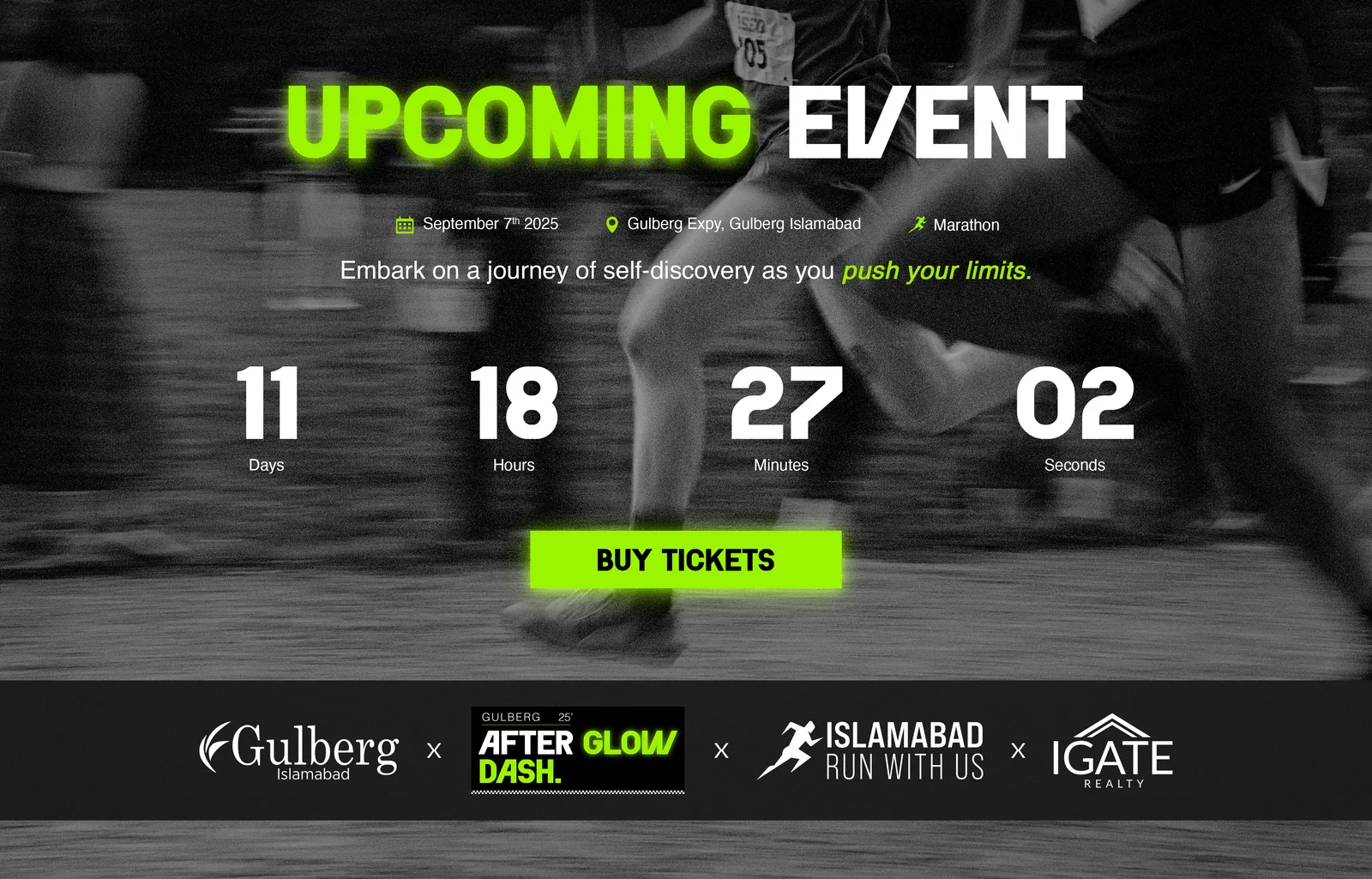
The page had one job. Not to explain the development, not to collect emails. To sell a place in a 5km run.
Make the dark the point.
Most running events borrow the language of daylight and endurance: sunrise, sweat, distance. AfterGlow went the other way. The name says it, the palette says it, and the whole system is built for a colour that only exists properly against black.
One neon green on near-black, a heavy condensed wordmark with a forward lean, a chequer strip borrowed from a finish line, and a single running figure reduced to a silhouette. That is the entire kit. It survives a phone camera at night because there is nothing subtle in it to lose.
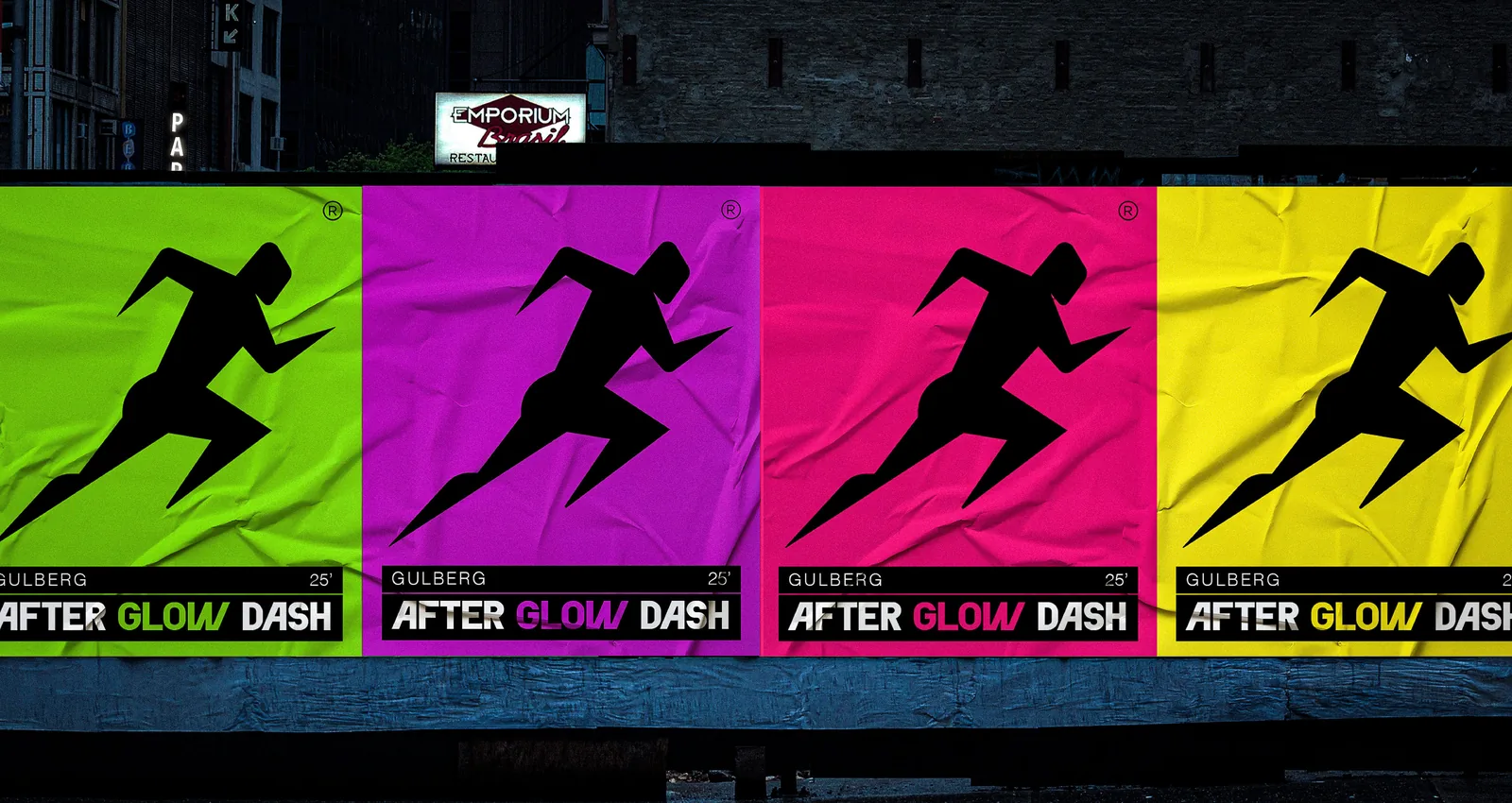
One figure, any colour.
The runner is a flat black silhouette, which means it can sit on any background the campaign needs without redrawing. On the street posters it runs across four different fluorescent grounds; on the bottles and the caps it is the only graphic.
Neon green is the brand, the other colours are the campaign. That distinction is what lets a first-year event look like it has a system rather than a poster.
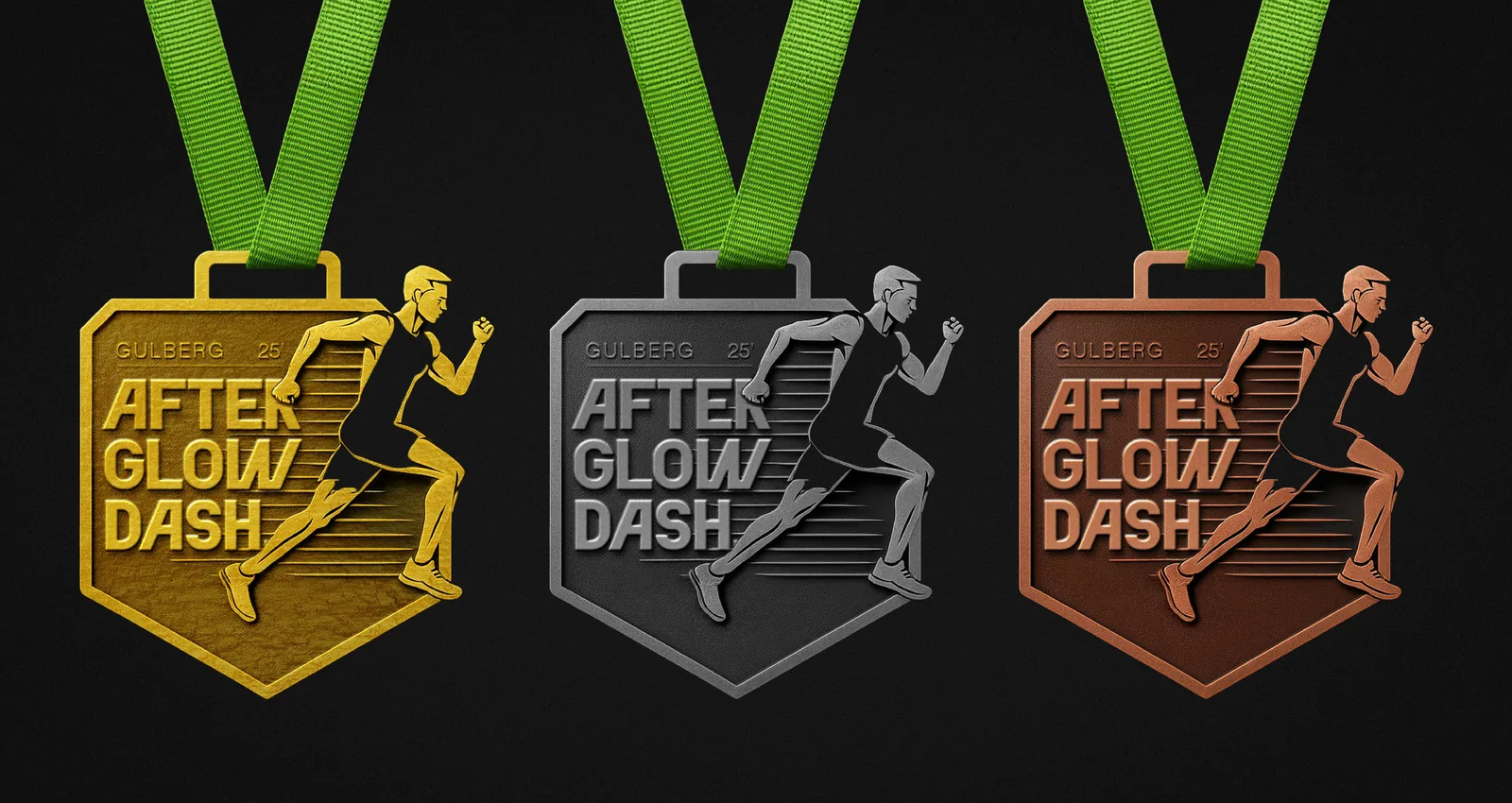
The one thing they keep.
For a first-time runner the medal is the entire souvenir, and it is the object most likely to end up photographed and posted. It carries the wordmark embossed, the silhouette in relief and speed lines cut into the face, on the same neon ribbon as the rest of the kit.
Nine objects, one grammar.
Runners meet an event as a pile of objects: a bib, a shirt, a bottle at the halfway point, a band on the wrist, a medal at the end. Each one was designed to read as the same event from three metres away, at night, in a photograph taken by someone else.
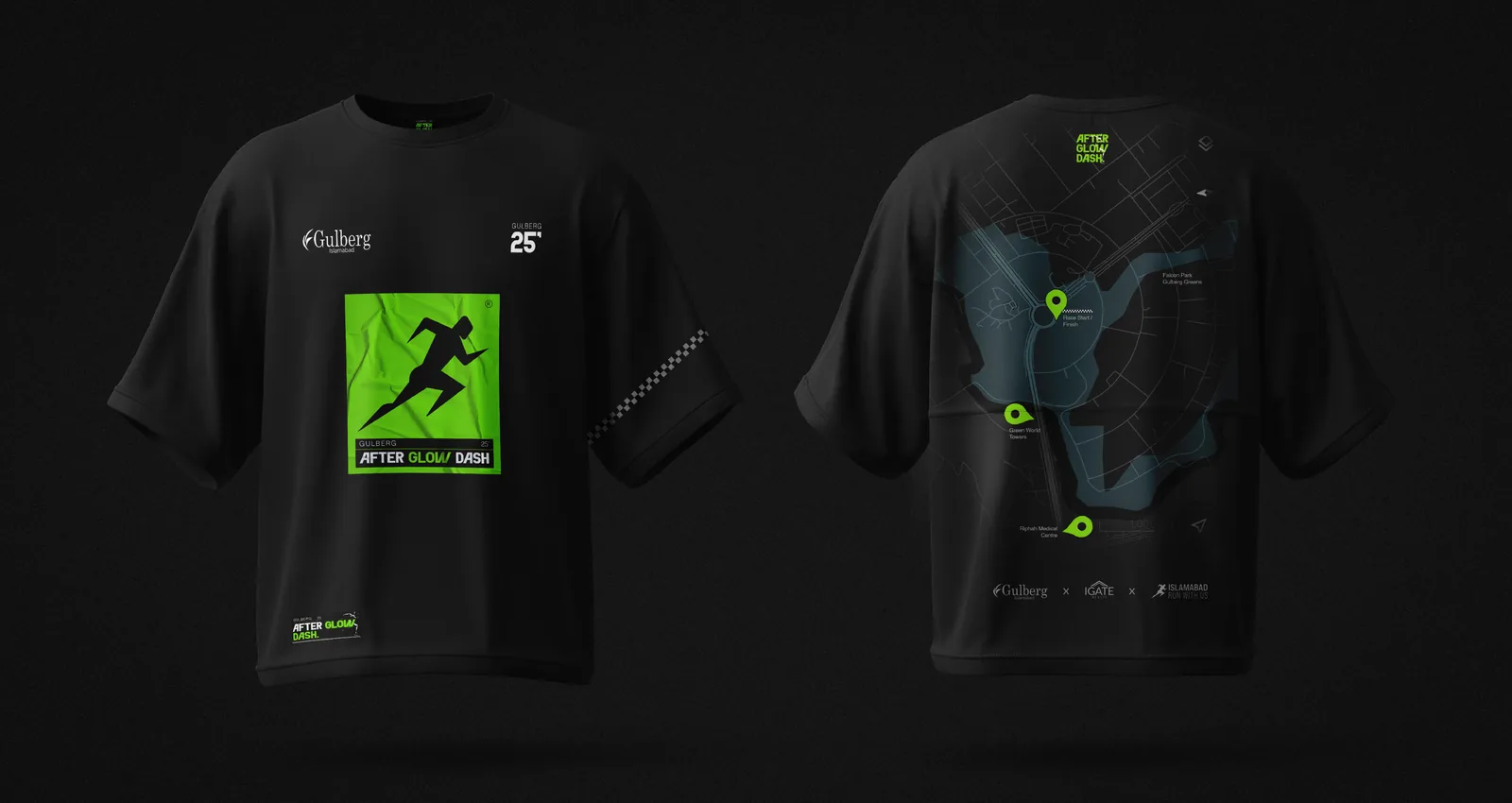
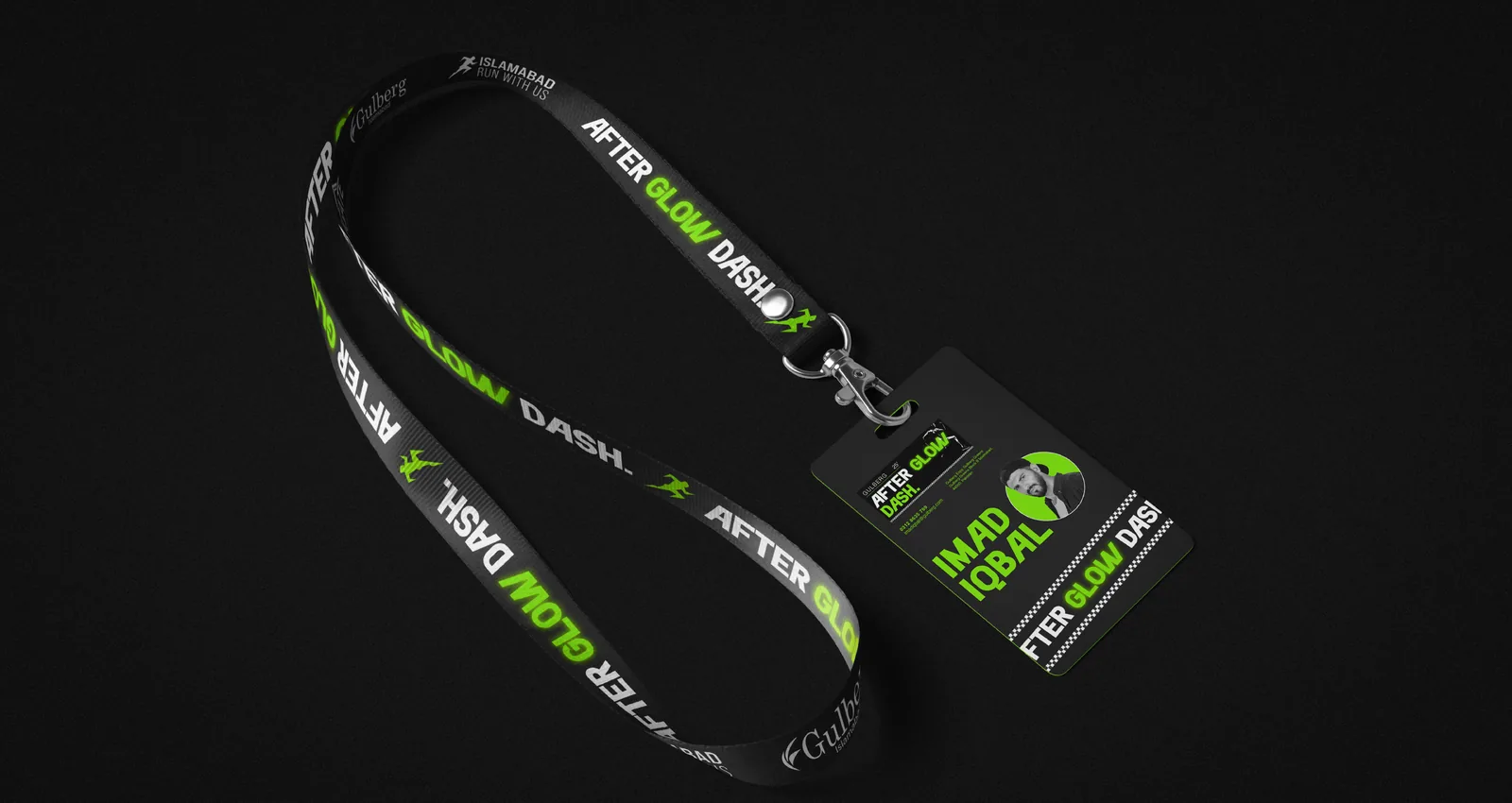
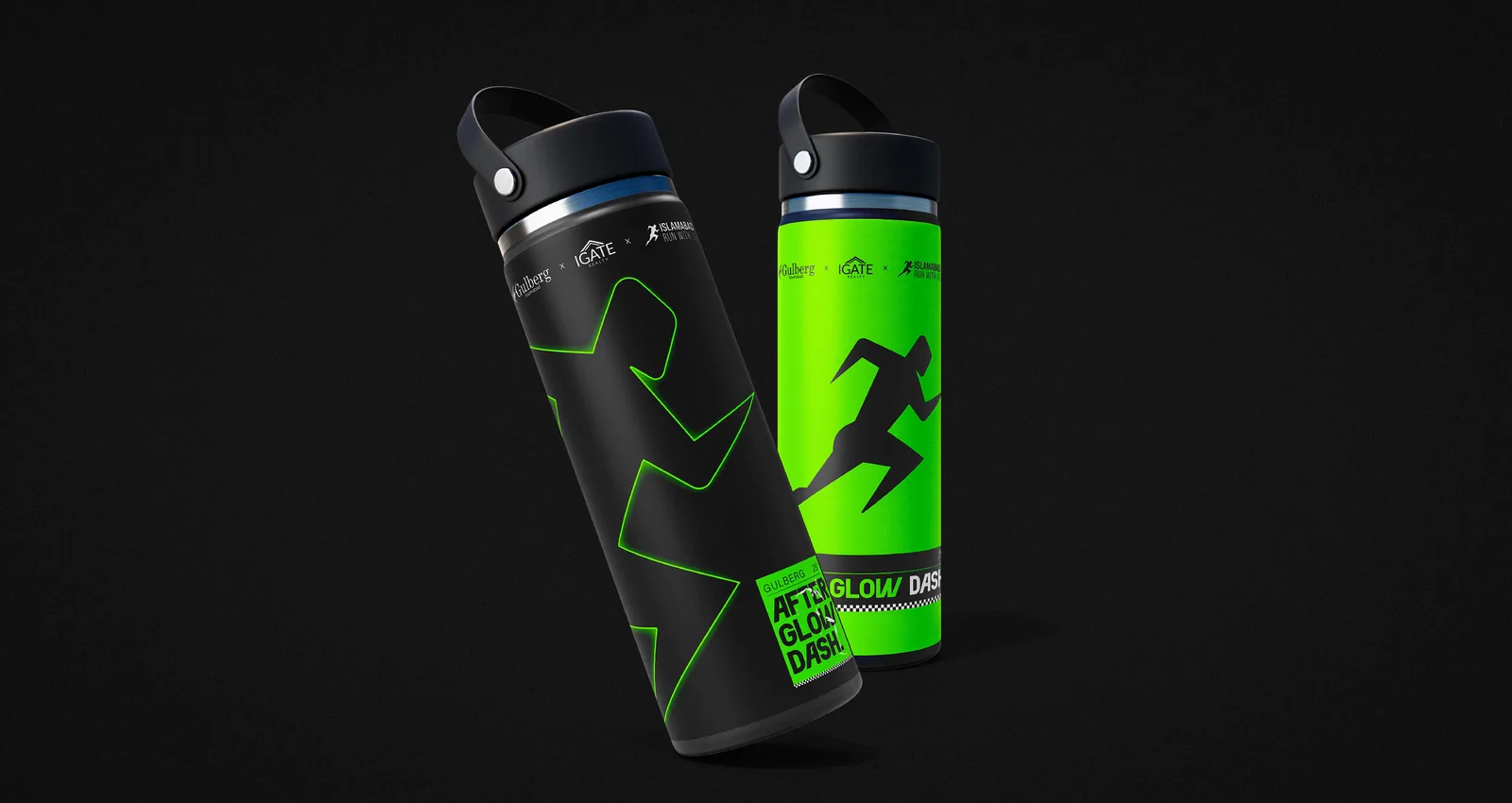
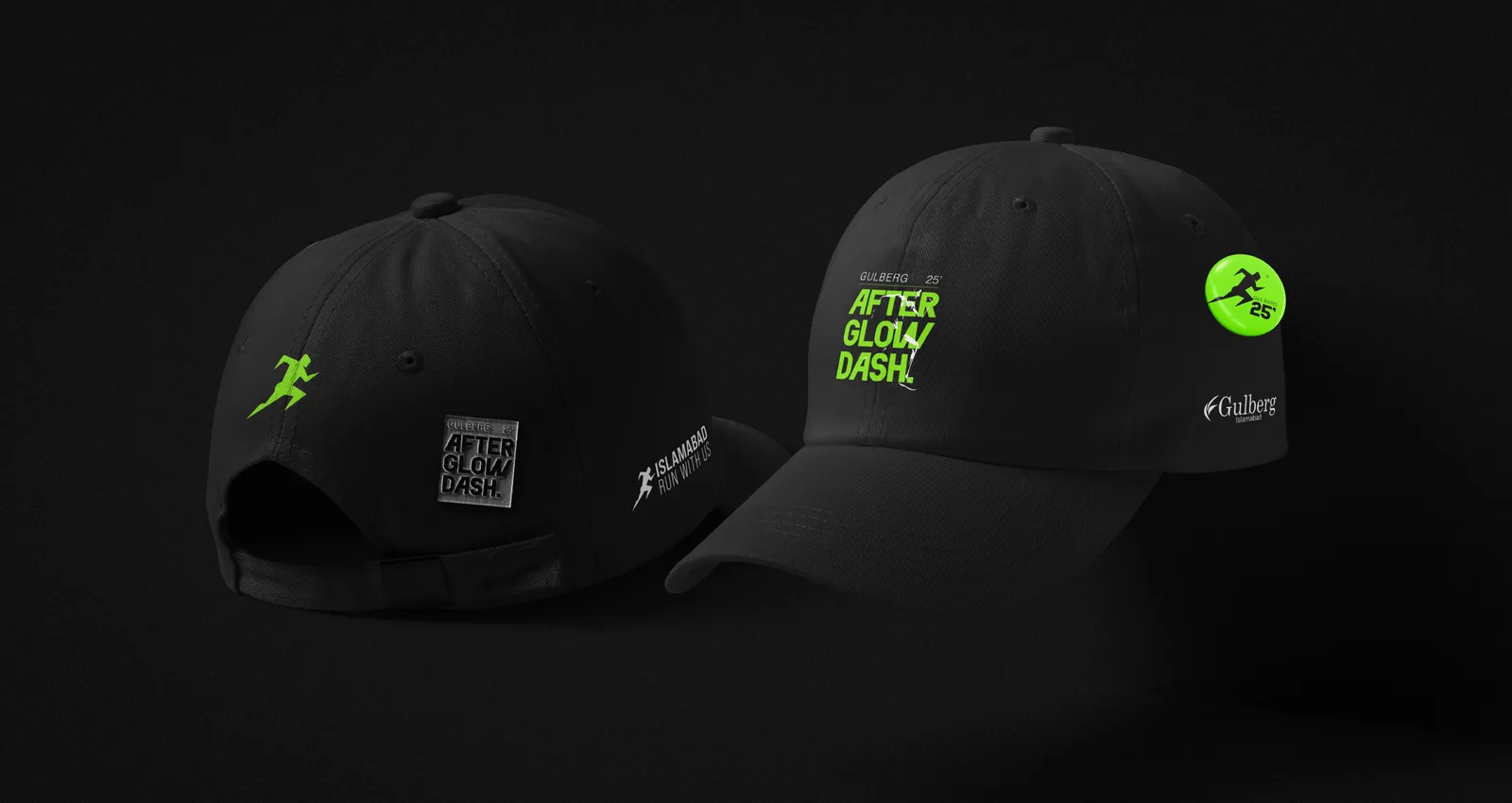
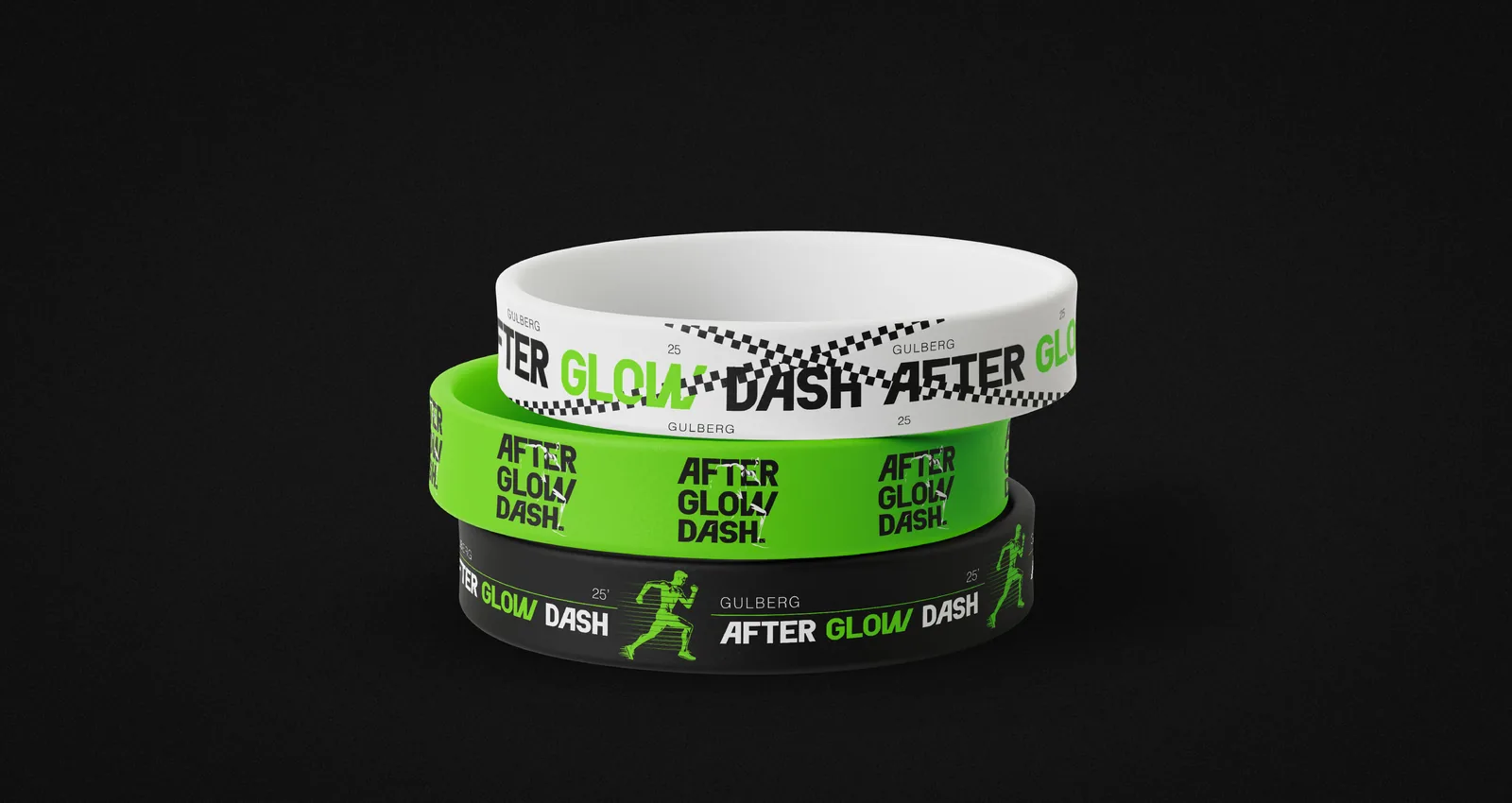
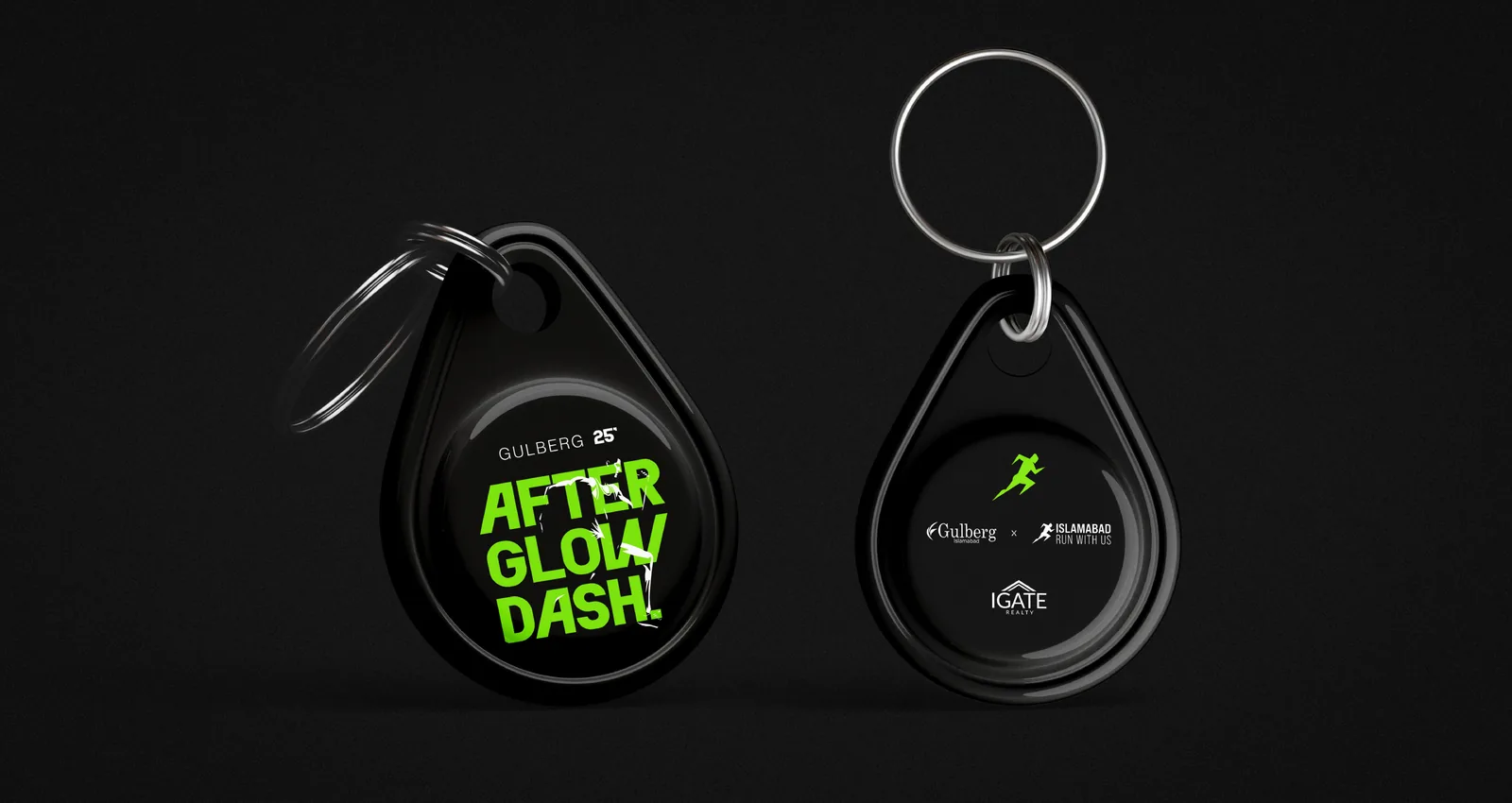
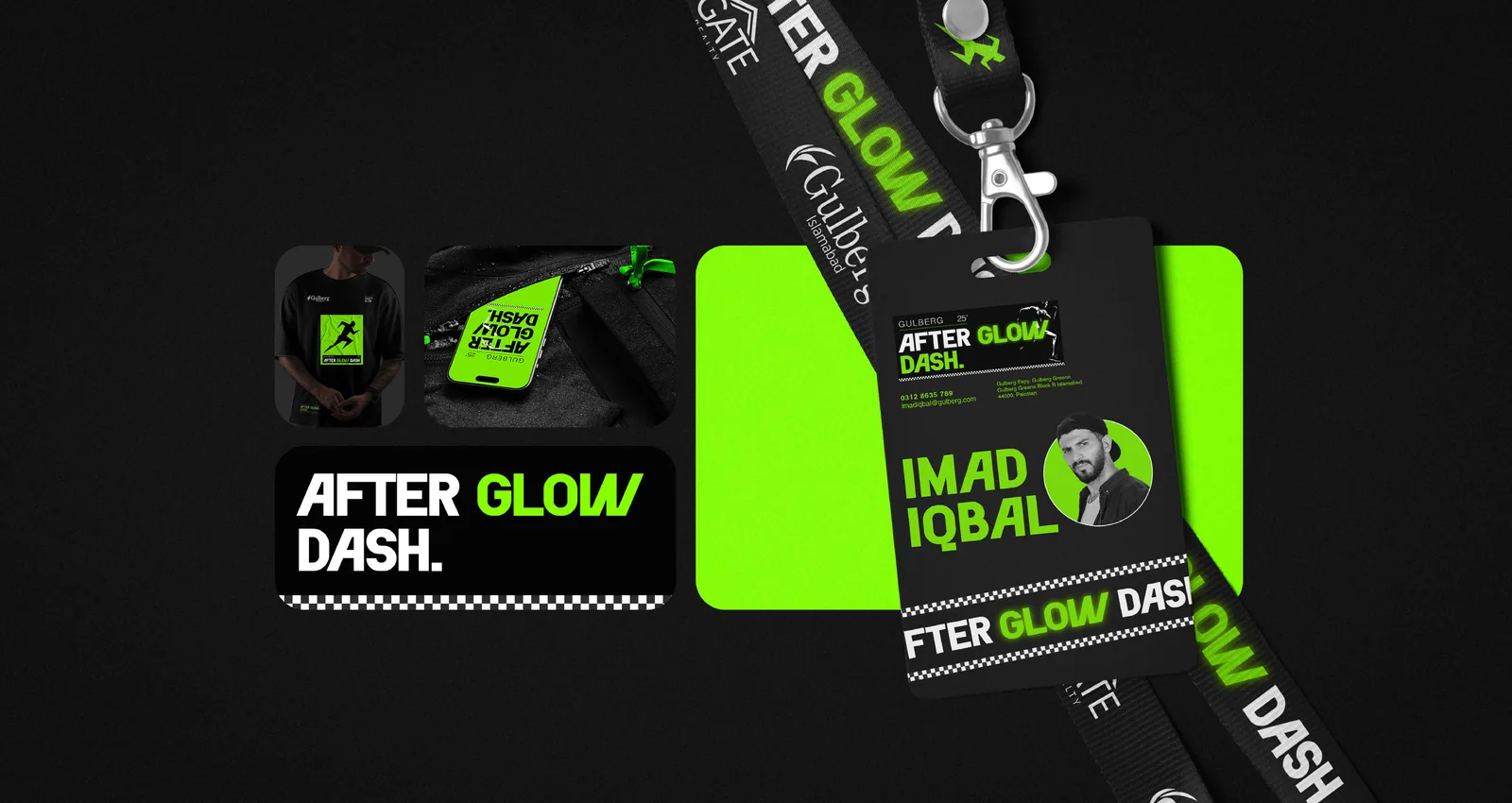
The full collateral system as delivered, from the merchandise design deck.
One job: sell the ticket.
The landing page sits inside the Gulberg Islamabad website, so it had to belong to that site's navigation while looking like a different event. The answer was to give the whole page over to the race and keep the parent brand to the header and footer.
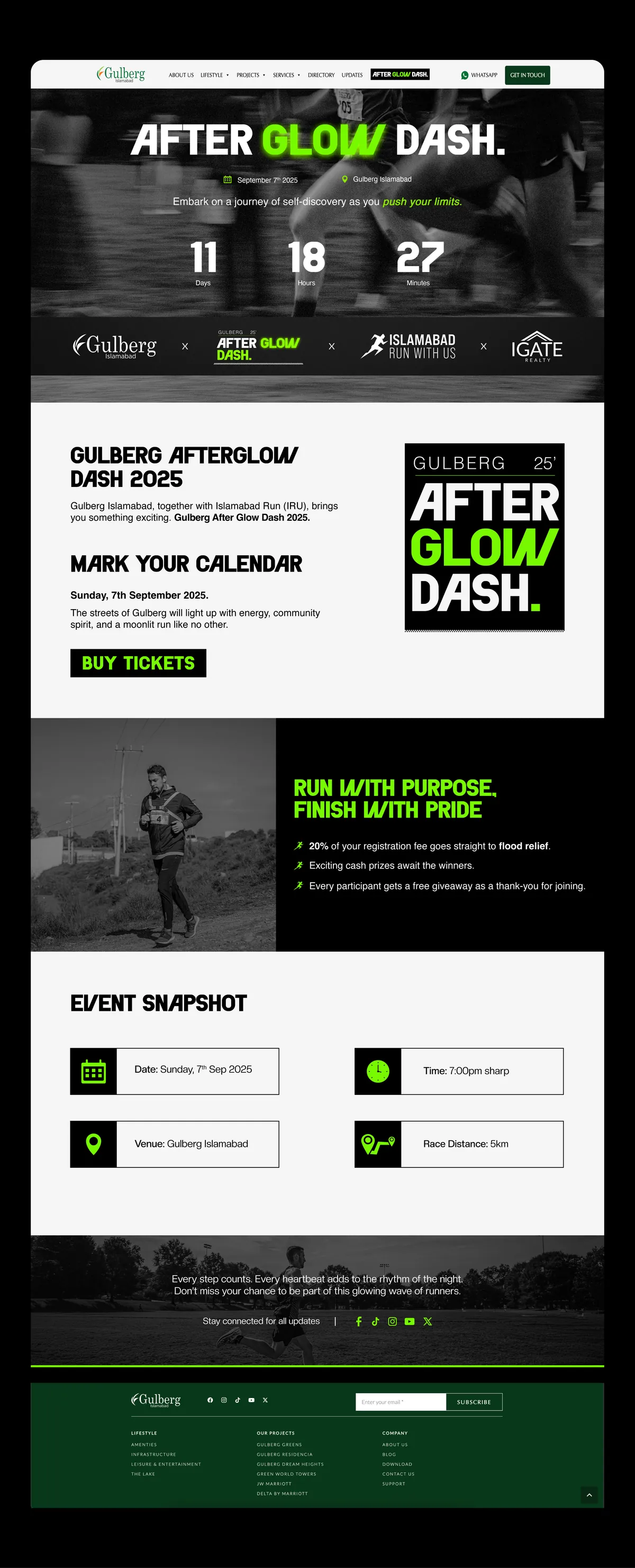
Countdown, reason, details, done.
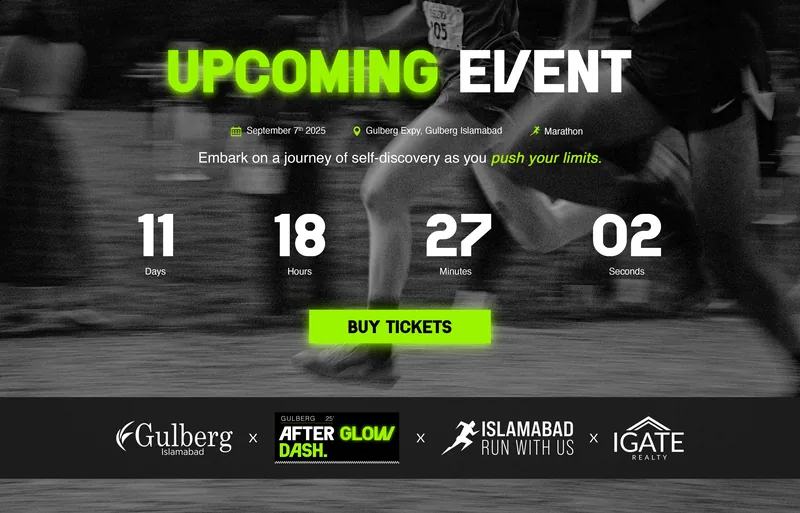
A live countdown at the top, because a date is the only urgency a first edition honestly has. Then the partner lockup, so the three logos are settled in one place and never compete again. Then the reason to run: 20% of the registration fee to flood relief, cash prizes, a giveaway for every participant.
The Event Snapshot grid answers the four questions that decide a yes or a no, date, time, venue and distance, in four boxes with no prose around them. Buy Tickets appears twice and nothing else on the page asks for anything.
Neon holds up in the dark.
The test of a night-run identity is not the artboard, it is what comes back on other people's phones. The start gantry, the finish arch, the bibs and the shirts all had to stay legible in low light and motion.
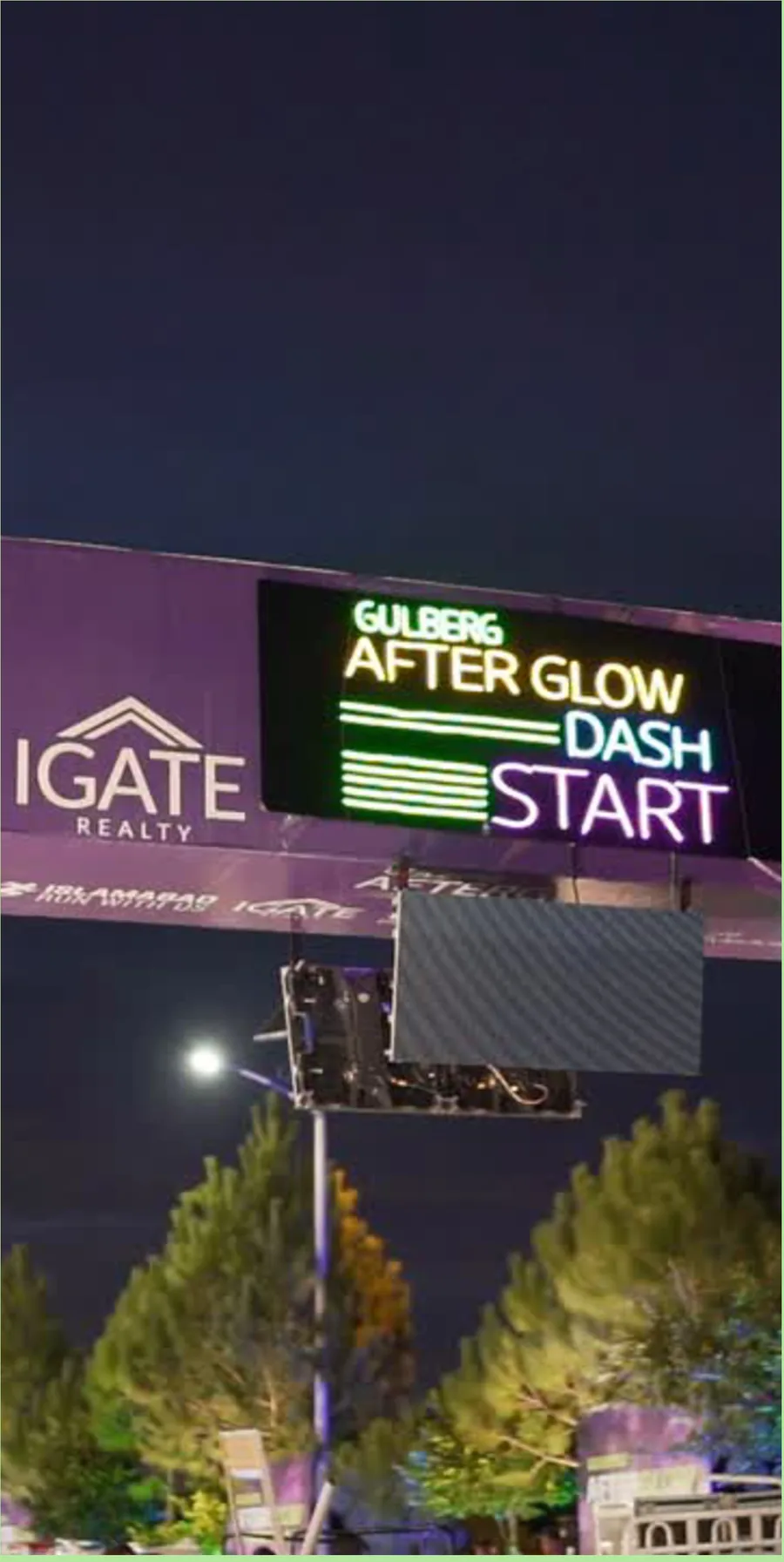
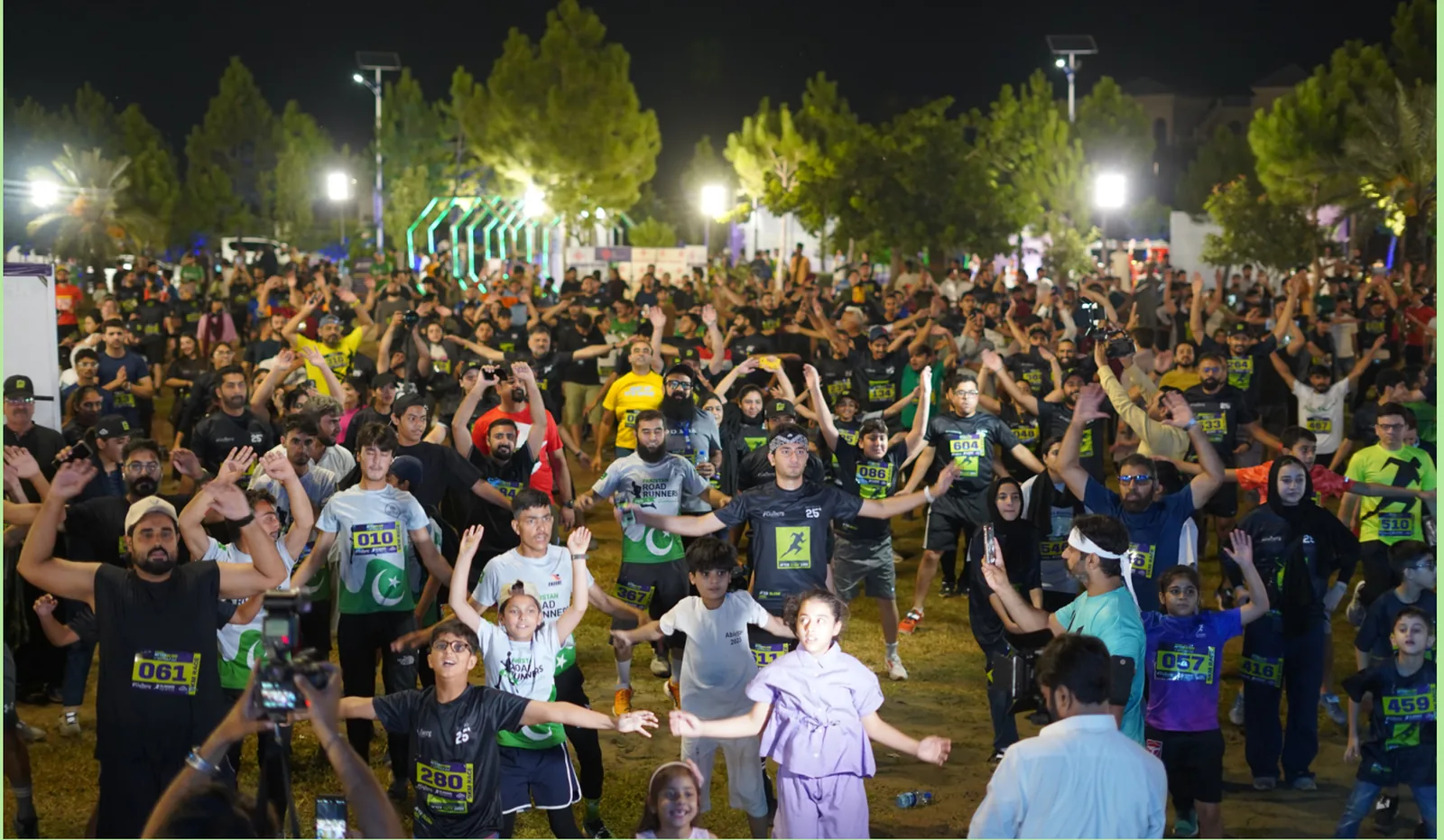
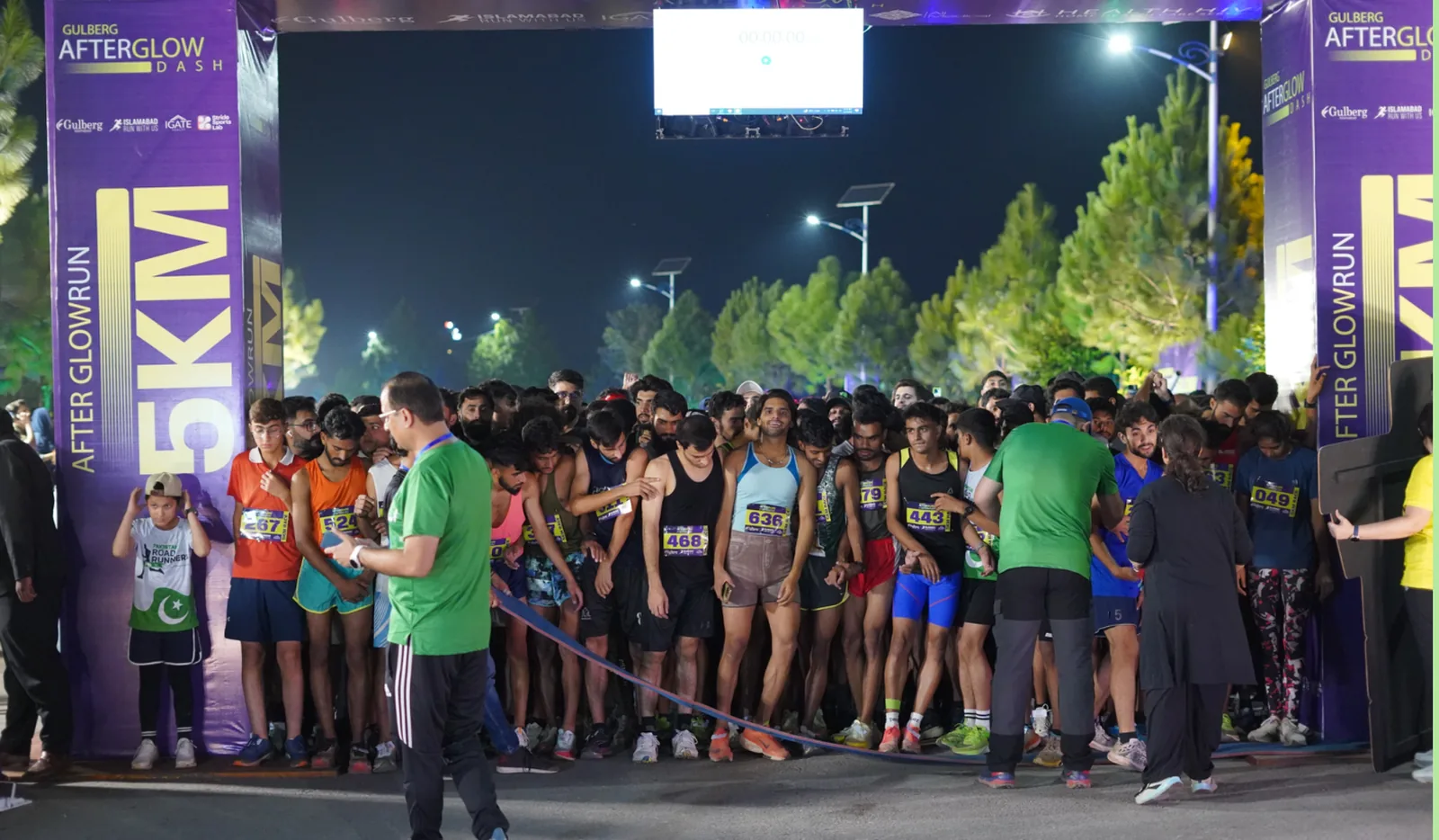
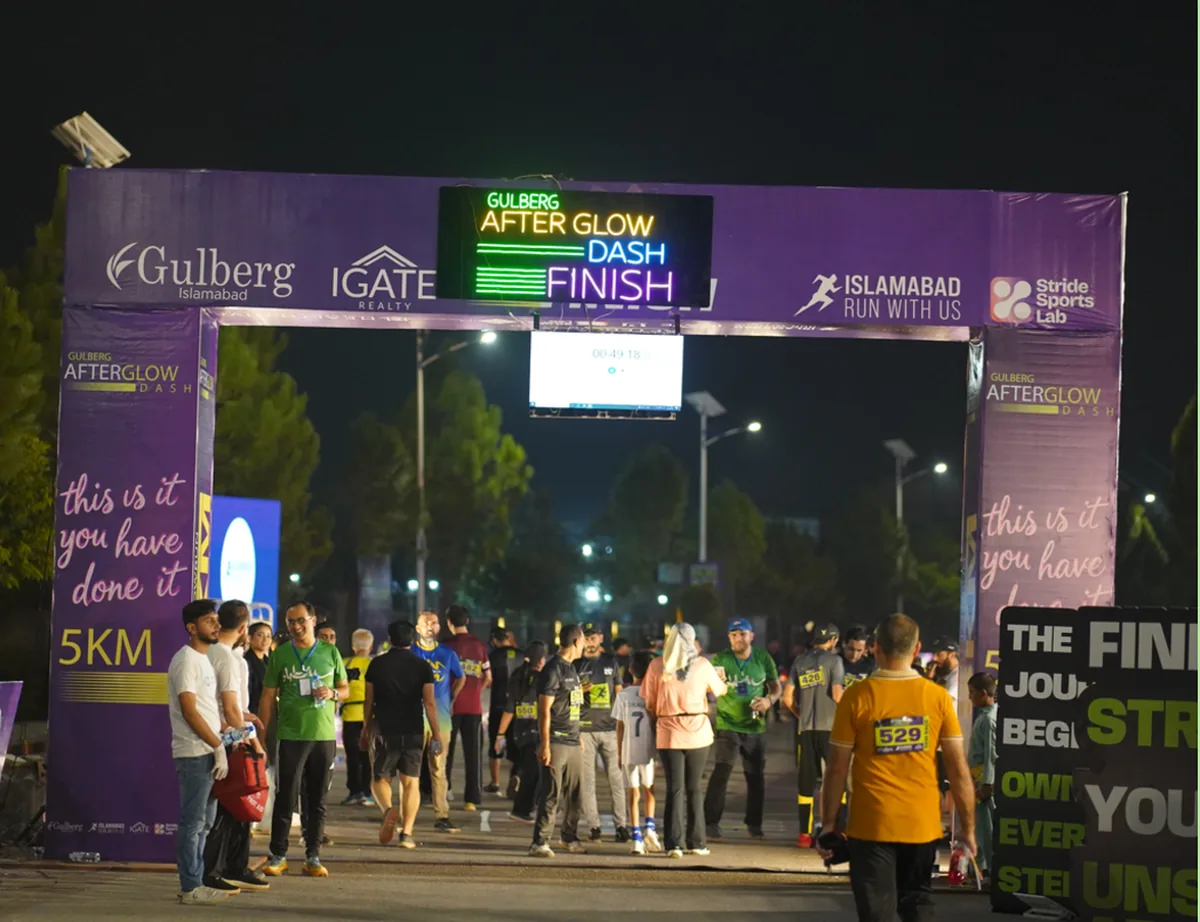
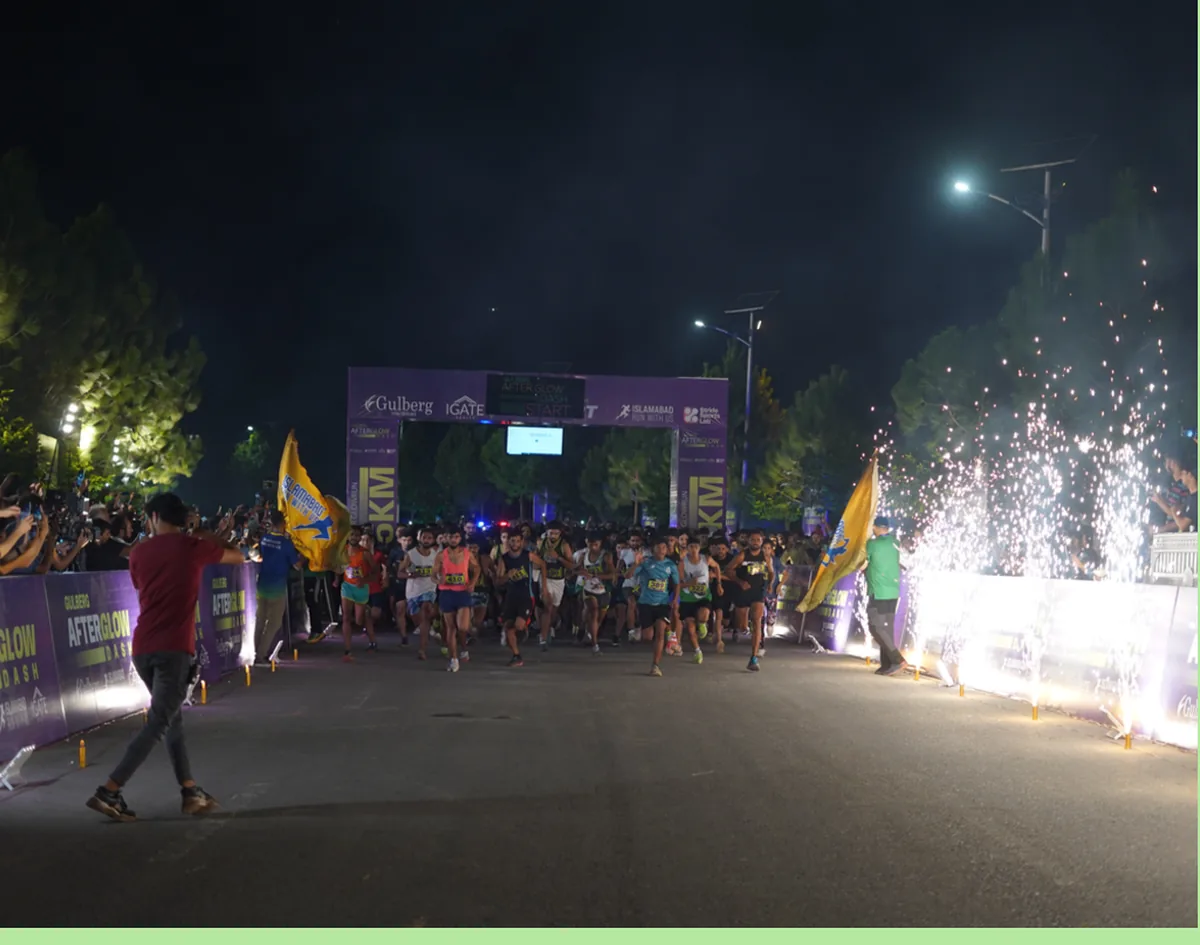
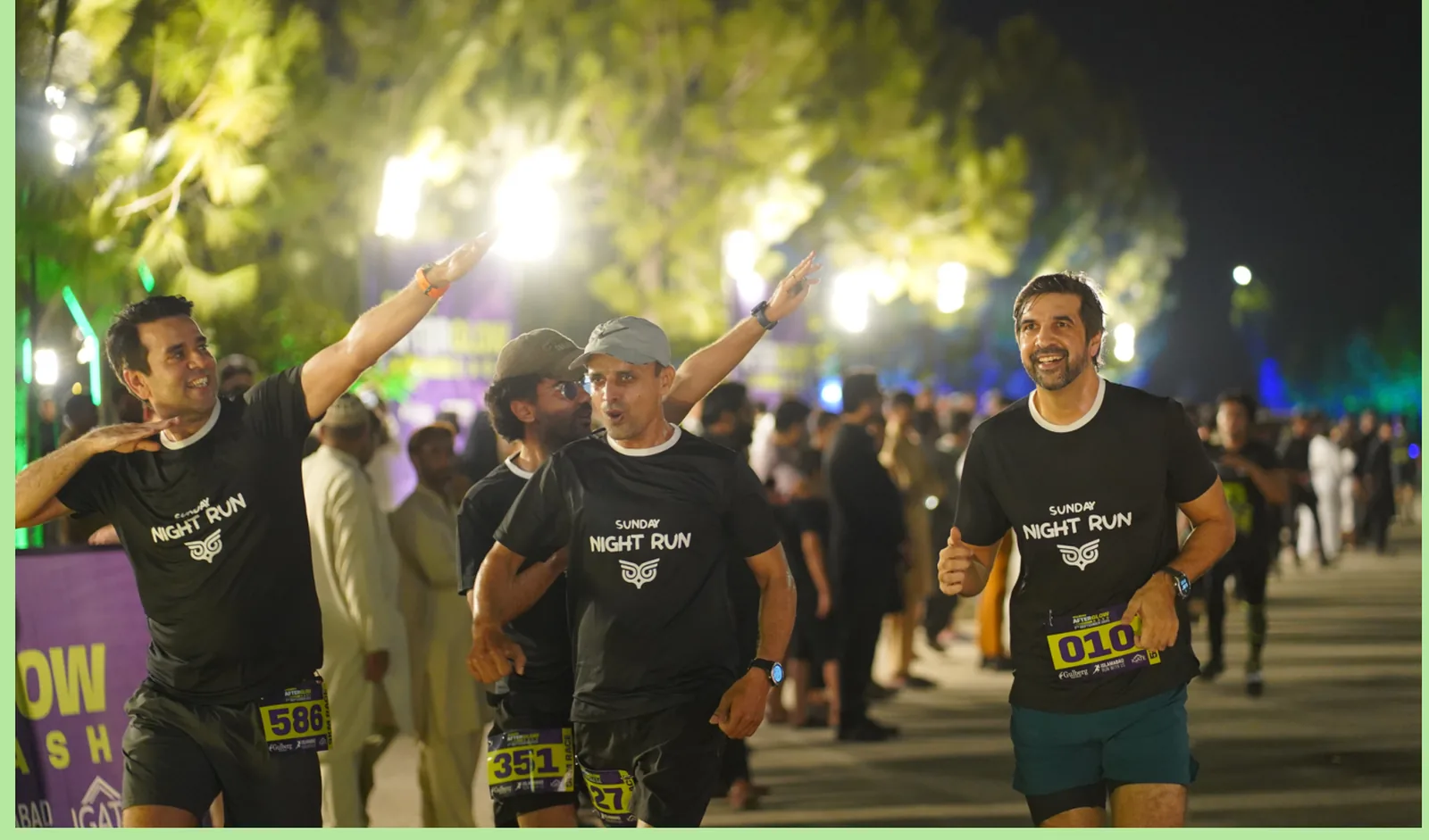
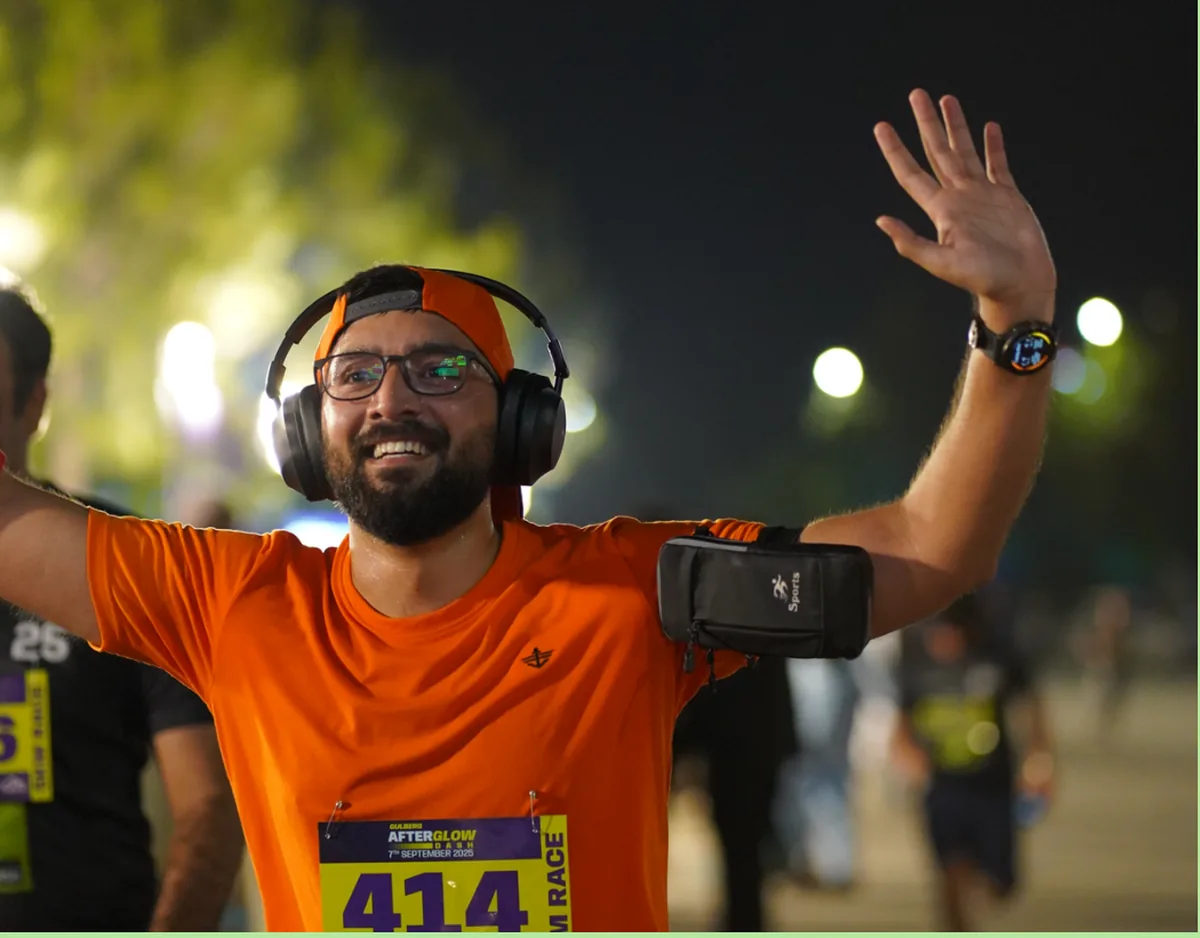
Event photography supplied by the client in the post-event report.
Creators, runners and the papers.
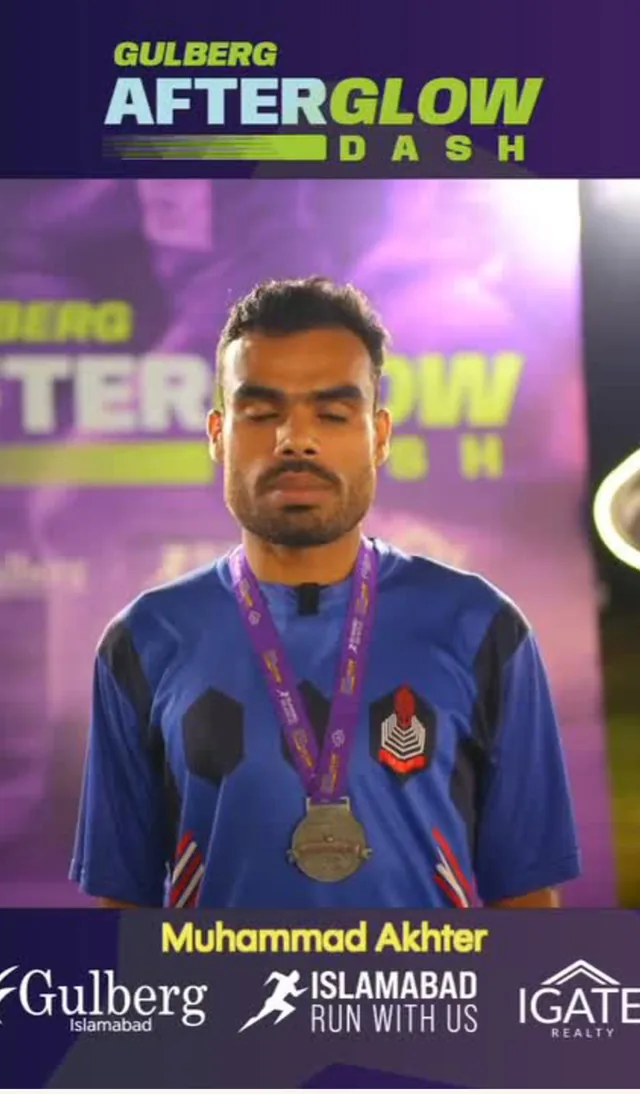
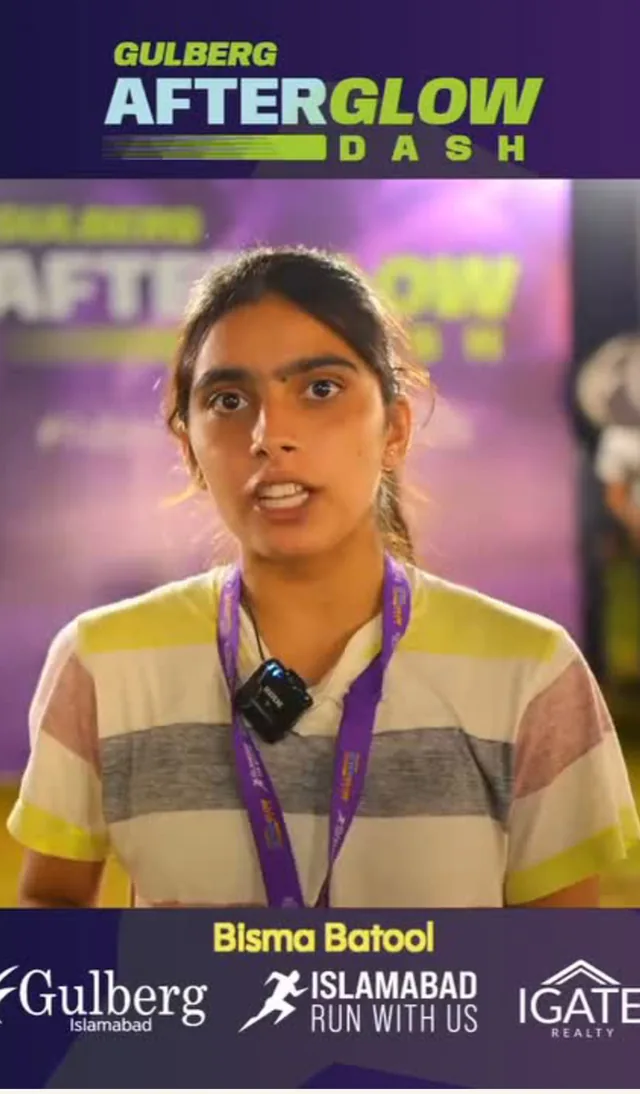
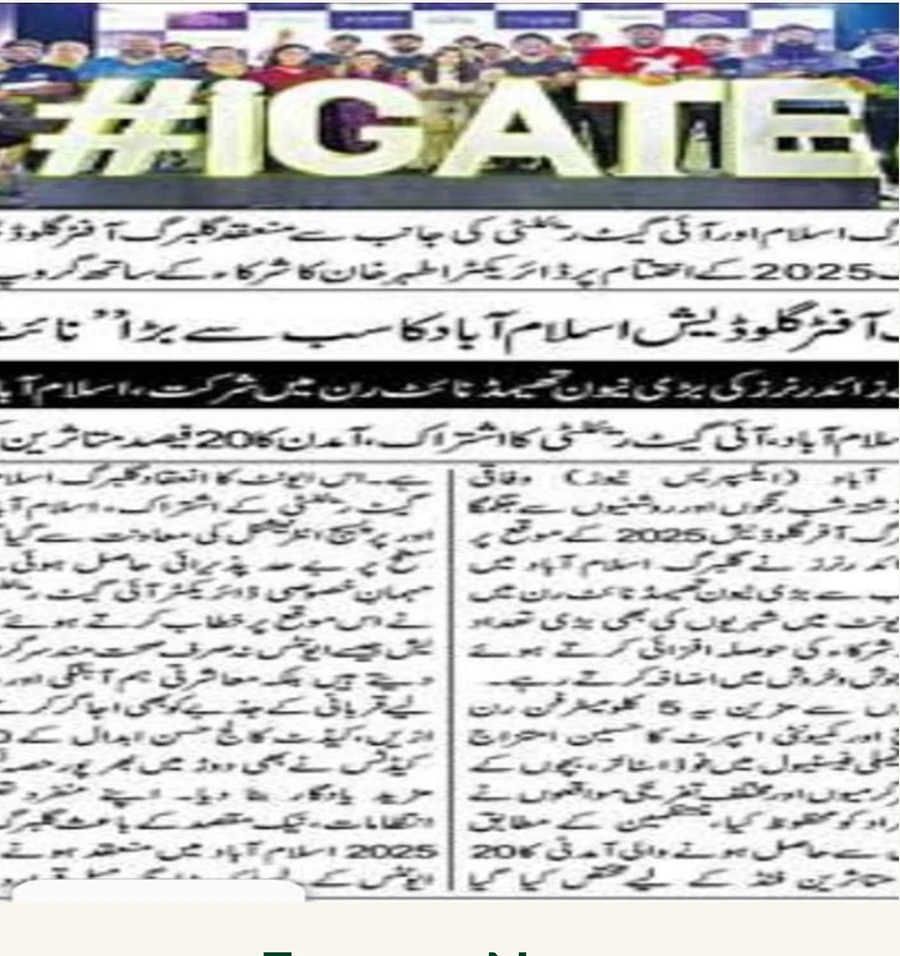
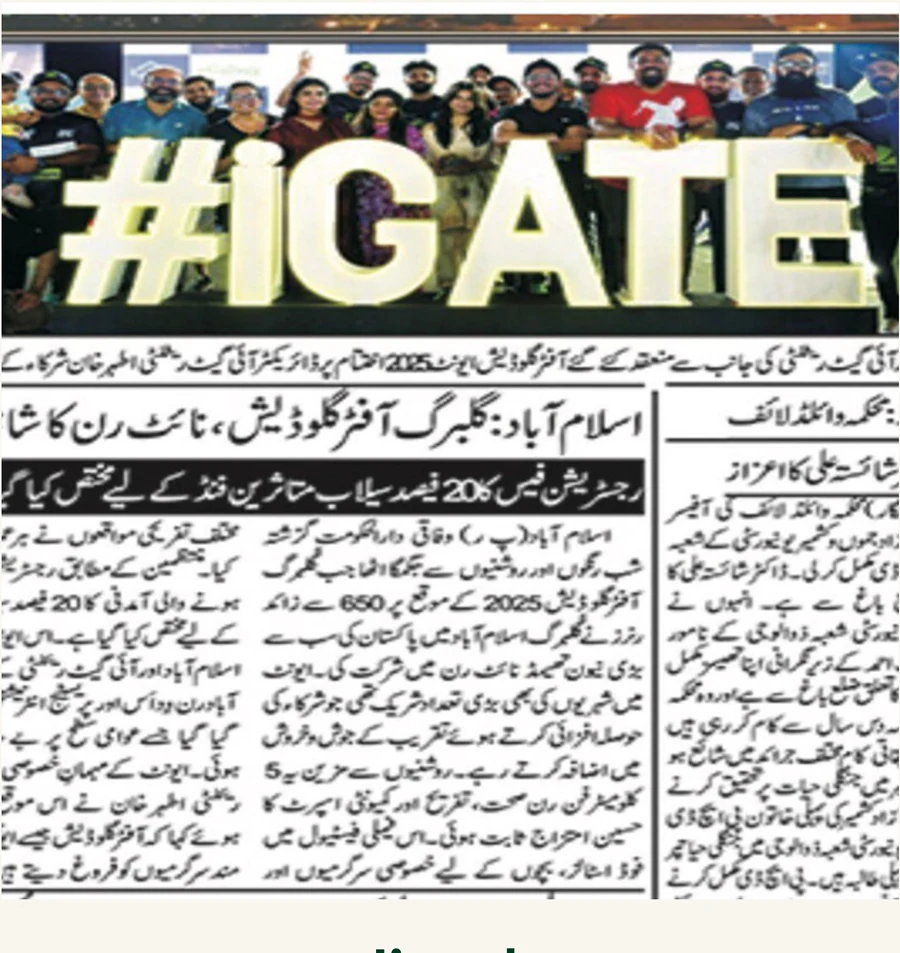
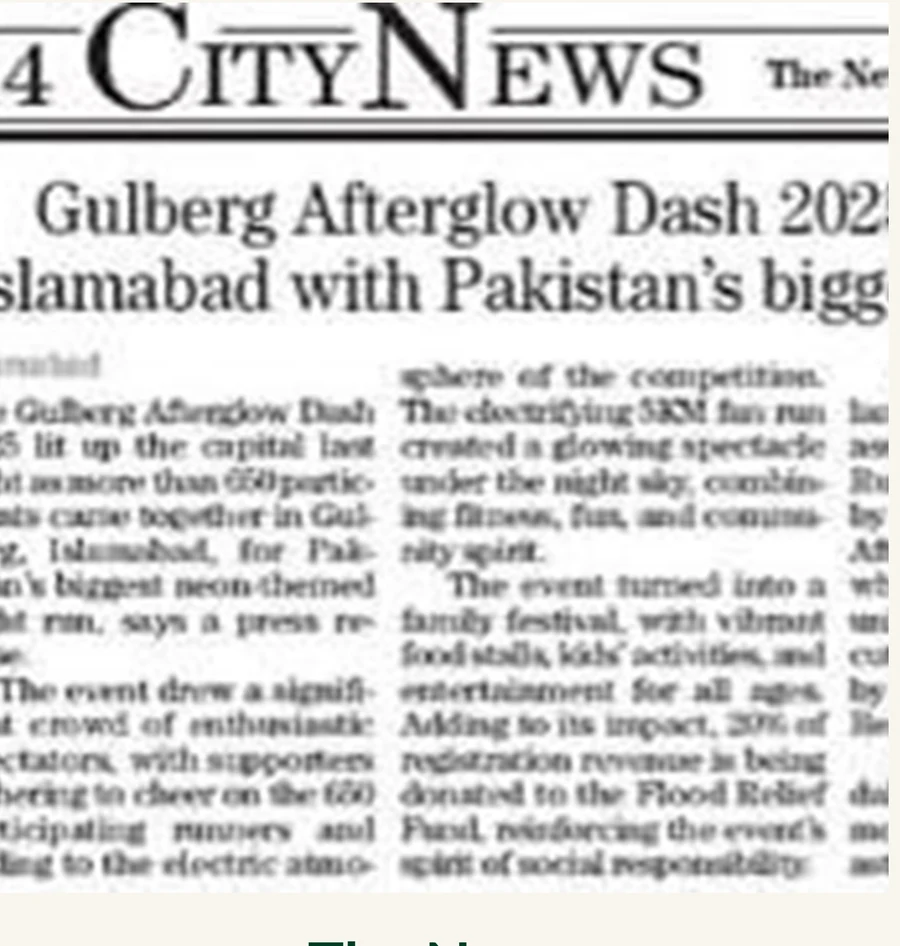
Awareness ran on organic content with selective paid amplification across Instagram and Facebook, supported by creators posting the date to their own audiences. After the event, three national newspapers covered it.
What the client reported.
The figures below are the client's, from their own post-event performance report. We did not run the ticketing or the ad accounts and we do not publish numbers we cannot source.
- Registrations hit the 650-runner cap, against an original plan for 300.
- More than 3,000 people attended, counting runners, families and supporters.
- Coverage in three national papers, Express News, Jinnah and The News, plus broadcast and out-of-home presence.
- 20% of registration revenue went to flood relief, reported in the press coverage as part of the story.
- Creator and influencer advocacy carried the date to audiences the event could not have bought directly.
- The client's own estimate put the total value at roughly twice the investment, across digital, media and brand equity.
What the design was actually responsible for
A run sells out because of the route, the community running it and the price. Design does not do that on its own, and we will not claim it did.
What the brand had to do was make a first edition look like something that had already happened: an event with a name worth wearing, a medal worth photographing, and a page that answered four questions and asked for one decision. That is the part we can show you, and all of it is on this page.
The second edition is where the identity earns its keep, because now there is a year-one photograph of a crowd in that green.
Source: client performance report for Gulberg AfterGlow Dash 2025. Value estimate is the client's, not an independently measured figure.
Design for the phone in someone else's hand.
Three things we are taking into the next event brand.
Pick the condition, then the palette.
The event happens at night, so the palette was chosen for what survives a phone camera in low light, not for what looks best on a white artboard. One fluorescent on near-black was a constraint before it was a style.
Separate the brand colour from the campaign colours.
Neon green is the event. Magenta, pink and yellow are the posters. Keeping that line meant the campaign could get loud without the identity drifting, and the second edition inherits a system rather than a poster.
The medal is the media buy.
For a first-time runner the finisher's object is the souvenir and the post. Designing it as carefully as the poster is the cheapest reach an event brand can buy.